Blog Post #5

Earlier in the course we debated about the use of laptops and other electronic devices in college classrooms, especially lecture classes, given the growing research indicating that note taking is not effective, students are distracted, and technologies can be distracting to others. Although we identified a number of reasons why policies might remain flexible, and devices used/encouraged, this doesn’t take away from our need to explore ways that technology – in context – truly supports learning and instruction. As a college student, what does this mean to you? Do you bear responsibility for your learning and if so, how do you manage your technology use in classes in ways that promote your learning (and not distraction)? What expectations do you have for your university to offer you learning environments AND professionals that support your success integrating technology or otherwise using it wisely? Do you see changes needed? 

Time and time again I’ve heard both my parents talk about how lucky I am to live in a generation and society that has the ability to use technology while learning. My parents both reminisce on walking through libraries to find the source they need for an essay and taking forever to use typewriters before their families got computers. Today, I can find a source instantaneously on the internet and can type up a draft without having to worry about starting over after one mistype. This efficiency and ease have contributed to my learning. Not only this, but technology has introduced new forms of learning and instruction. Most commonly used by students at the University of Minnesota is Canvas. Canvas is an online course management tool that provides opportunity for online instruction and learning that includes discussion forums, exams and quizzes, and digital communication. Online learning outlets such as this introduce technology to our classrooms in an appropriate way that does not take away from our learning.

I believe that I bear partial responsibility for my learning. I think that both teachers and classroom contexts, such as the environment, my classmates, and learning tools, also can be responsible for my learning. It is up to my teachers to employ effective teaching and it is up to me to apply their teaching and learn. In classes where teachers use technology, it is my responsibility to use this tool in an effective way. I manage my technology use in classes often by upholding the elements of digital citizenship, primarily digital literacy. These elements are presented in the article, Digital Citizenship: Paving the Way for Family and Consumer Sciences, by Roxie Godfrey. In order to effectively use technology in ways that promote my learning, it is my responsibility to first take time to understand it. I have to take time at the beginning of each class to familiarize myself with the technology that the teacher will employ and learn how to use it in a way that will further my learning, rather than distract me. It’s also important for me to manage my technology use in class, especially through Canvas, by being conscious of my digital etiquette when collaborating with students online, and by appropriately utilizing digital communication. Additionally, using the Four-Stage Digital Citizenship Reflection Model, created by Mike Ribble (Godfrey, 2016), in order to manage technology use in classes, can promote effective learning. Managing technology in learning environments becomes easier by first being aware of your technology, then using it in appropriate ways, being able to model healthy use, and finally, being able to reflect on your own use. This can be put into practice, for instance in classes where taking notes on your computer is an option. I have to be able to focus on the lecture and simply take notes, instead of using my computer to online shop, which is distracting. This inappropriate use would be distracting to my classmates as well, so I have to be able to model appropriate technology behaviors in class in order to benefit my learning and that of those around me. 

In order to employ effective technology in the classroom I expect the University to offer effective programs. Recently, the University of Minnesota made the switch from using Moodle to Canvas. This made a huge difference in the effectiveness of technology in learning as Canvas is significantly better. I expect the University to provide high quality technology programs that offer diverse learning tools, such as Canvas. In the article, Teaching with Technology,from the University of Washington, options for using technology in the classroom are laid out, such as online collaboration tools, presentation software, tablets, course management tools, clickers and smartphones, and lecture-capture tools (University of Washington). I expect that the university, as well as teachers will use diverse options such as these in order to cater to multiple learning styles and, therefore, support our success in class. I think also, that if Universities expect that all students use programs like Canvas, they must be able to provide technology to those without access. Digital access, an element of digital citizenship, is important to consider because all students should have equal opportunity to take advantage of the digital programs that the University gives us access to. This will lessen the divide among students and will support every student’s success in a classroom that integrate technology. 

Overall, I believe that students, teachers, and the university are all responsible for effectively integrating technology in the classroom. It is important for the university to provide sufficient programs and tools, it is important for teachers to employ technology effectively, and it is important for students to be responsible with their technology and know that they have the ability to dictate whether or not their technology use is effective. 

References

Godfrey, R. (2016). Digital Citizenship: Paving the Way for Family and Consumer Sciences. Journal of Family & Consumer Sciences,108(2), 18-22. doi:10.14307/jfcs108.2.18

Teaching with technology. (n.d.). Retrieved from http://www.washington.edu/teaching/teaching-resources/engaging-students-in-learning/teaching-with-technology-2/


Blog Post #4

Do you foresee that changes in the workplace will mean changes for family role division – so that work is accomplished AND the functions and responsibilities of the family to children, couples and the family as a whole are fulfilled?

As workplaces are evolving, so are family roles. New ways of working are allowing parents to work anytime and anywhere. This accessibility allows them to more easily take on multiple roles within their family. Historically, society has established men as the primary earner, and women the primary caretaker. As these gender roles are deteriorating through societal change, new ways of working are also working to fight these roles. Not only do these new ways of working significantly benefit new parents trying to balance roles, they change the way we look at role division amongst families in regard to gender. Although, these new ways of working are beneficial to families, it can also make it harder for family members to establish boundaries between each role. This increased sense of accessibility often allows family members to work wherever and whenever they want, and while this increases flexibility, it also can impede on their role as a caregiver. 

In households around the world, especially the United States, parents struggle with role division following the birth of their children. In the United States, where there is no right to paid family leave, families are often forced to send at least one parent back to work in order to maintain financial stability. Family role division and gender roles are encouraged due to the fact that women are more in need of maternity leave to recover from pregnancy, as well as the fact that men are often paid more. With men returning to work, especially when their salary is higher, financial stability becomes less of a worry. Simultaneously though, this forces one parent to take on the role of the primary earner, and the other the primary caretaker. This, in turn, creates a bigger divide between family roles, and often gender roles. Today, new ways of working are changing this. By allowing parents, especially new parents, the ability to work from home while taking care of their children, gives parents the ability to take on both roles of working and caretaking. Flexibility that comes with new ways of working, such as easier communication and creating your own schedule, is very beneficial for parents wanting to take on multiple roles. In the article, New Ways of Working: Impact on Working Conditions, Work-Family Balance, and Well Being, by Evangelia Demerouti, Daantje Derks, Lieke L. ten Brummelhuis, and Arnold B. Bakker (2014), it is stated, “This flexibility can give individual workers the opportunity to better balance their work and home domains, as they can allocate their time over work and family activities in a way that suits their situation best” (p.3). Being able to have more say and control over one’s work domain gives them the opportunity to function better and maintain their familial responsibilities. It allows parents to plan their work around responsibilities with their families, such as taking their children to and from day care. Parents who are able to balance their work and family create healthy boundaries that promotes their ability to manage multiple roles. 

Although some parents are able to maintain healthy boundaries between work and family life, some families are unable to do so, which negatively affects both realms. New ways of working give parents the ability to take on both work roles and parenting roles by increasing accessibility, but at times this accessibility becomes too much. Being able to pick how, where, and when you work can be detrimental as it blurs the line between work life and family life. “There are indications that the blurring of boundaries leads to a deteriorated work-family balance” (Demerouti et al., 2014, p. 4). These boundaries have the ability to create a health family life, but by being unable to separate work and family, health family life is threatened. In the article When You Just Cannot Get Away by Ronald W. Berkowsky (2013), boundary theory presents the idea of boundary permeability, which, “refers to the degree in which an individual may occupy multiple roles simultaneously… despite the existence of role boundaries even as an individual occupies one role, aspects of another may impede upon and influence the currently occupied role due to a more permeable or ‘blurred’ boundary between roles” (p. 521). Because of the availability that comes with new ways of working, boundaries become permeable. Technology allow parents to work and parent simultaneously. Attempting to take on both roles at once can be detrimental to role division, as it takes focus away from each role, so that each one is not given the attention it needs.

Overall, new ways of working can either be beneficial or detrimental to family role division. The accessibility and availability that technology gives members to work whenever and wherever they want allows family members to take on both roles of parenting and working. This can strengthen family connection, function and responsibilities as it allows parents to plan their work in ways that allow them to be present with their families as well. Even so, this accessibility can be consequential in terms of family and work functioning when parents are unable to establish clear boundaries between each role. Parents must be able focus on each role individually in order to be successful. 

References

Berkowsky, R. W. (2013). When You Just Cannot Get Away. Information, Communication & Society, 16(4), 519-541. doi:10.1080/1369118x.2013.772650

Demerouti, E., Derks, D., Brummelhuis, L. L., & Bakker, A. B. (2014). New Ways of Working: Impact on Working Conditions, Work–Family Balance, and Well-Being. The Impact of ICT on Quality of Working Life,123-141. doi:10.1007/978-94-017-8854-0_8

Blog Post #3

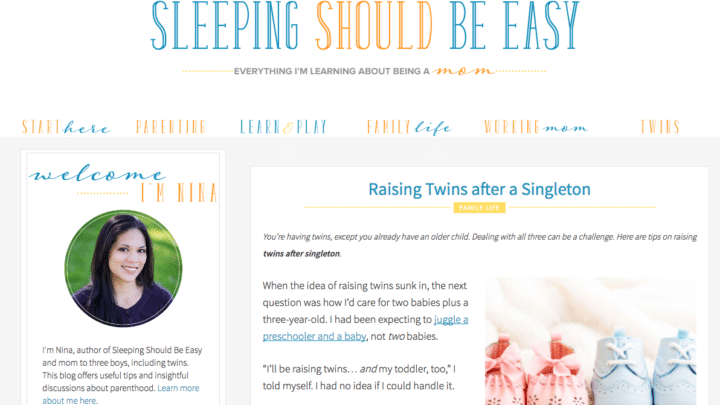
For nearly 20 years Blogher has provided Internet space and tools for women to write blogs. Many of these blogs are from mothers who express themselves and their thoughts and concerns about being a mother in today’s society. Some offer parenting tips, or blend parenting with other personal activity interests (e.g., cooking, party planning, travel). 10s of thousands of women blog through blogher; many with devoted followers.  Consider the potential benefits and costs to this blogging. What does writing a parenting blog mean in terms of time cost and personal energy? What does it mean to the commodification of a mother’s image? Might she feel the need to ‘be’ a certain kind of mother, or to share certain stories or images to have a place in the eyeball marketplace of readers? And what might her sharing stories and images of her children and family mean to their sense of personal privacy? In other words, while we might argue that personal blogging can be an extension and expression of the identity of motherhood that is positive for the woman’s confidence, what costs might it run to her self and to her family? 

Image found:
https://mamaandbabylove.com/health-motherhood-blogs/

As society has become increasingly dependent on technology, blogging, too, has become more widespread, especially among mothers. Blogs have become outlets for discussing and reflecting on various parenting techniques and experiences, as well as spaces to offer advice and support for other mothers. Overall, blogging offers multiple beneficial uses for the blogger as well as the reader, while at the same time, can have a negative impact on the family’s and individual’s wellbeing.

Blogging includes both a time cost and the use of personal energy. For a parent, it can be difficult to take time out of their busy schedule to sit down and write, especially when a nice nap is also an option. Simultaneously, though, blogging can be therapeutic and relaxing to a certain extent. Similar to journaling, blogging gives one an outlet for reflection, which is very beneficial when it comes to mental health and the overall health of the family. When caregivers are able to take time and energy to reflect on their experiences as a parent, moving forward, it may become easier to go through similar experiences after previously experiencing and reflecting on them. 

While often beneficial, sharing personal experiences has the potential of becoming harmful to the family dynamic. Blogging can expose private matters that some family members are not comfortable having online. Even though a parent blogging may be comfortable with it, boundaries may be broken by posting personal anecdotes about other family members. Also, while one may feel comfortable initially sharing family experiences, once they are posted, family members may realize that sharing personal stories is something they are not comfortable with. This can be detrimental to a family’s sense of personal privacy as it can be difficult to remove what is shared online from the public eye. It is important for parents who choose to blog ensure that they, as well as their family members, are comfortable with what is being posted online. 

Many mothers choose to blog in order to emphasize their identity of a mother and to share their personal perspective on certain situations. This process can be empowering for mothers by being able to support others throughout their journey of being a parent. In the journal article, Parenting Gone Wired: Empowerment of New Mothers on the Internet, researchers, Clare Madge and Henrietta O’Connor, investigate a popular blog, Babyworld, and its users. From their study, they report, “Online support was translated into feelings of empowerment by many of the women using Babyworld. Several women noted this sense of empowerment through increased confidence and a greater sense of control” (p. 207). By having an outlet to share their highs and lows and find other mothers going through similar experiences, parental confidence can increase by knowing that they are not alone. This leads to empowerment by connecting a group of people doing something important. Because of this, though, mothers may feel pressure to glorify their experiences, in order to portray her parenting to others in a positive light. 

While some blogging parents are good at being transparent, blogging can also trigger the need to be a certain kind of mother. This is partly because readers often expect the sharing of positive and helpful experiences, which is often motivated by the blogger’s fear of negative feedback from readers. According to TIME article, Help! My Parents are Millennials by Katy Steinmentz, “Nearly 80% of millennial moms say it’s important to be ‘the perfect mom,’” (p. 42). This phenomenon is encouraged by the constant posting of images and stories often done in blog posts in order to portray one’s family as perfect. At the same time, the competitive nature of parents and their various parenting styles can lead to the need to be perfect in order to avoid criticism, especially online. Today, people are not afraid to give criticism when hidden by a screen and a username. The criticism that some face on their parenthood blogs influence one’s image of self as a parent. Negative feedback toward one’s parenting experiences may be detrimental to their confidence, while at the same time positive feedback can reinforce certain parenting behaviors. Overall, blogging has the potential to encourage negative behaviors, such as attempting to be perfect and crossing privacy boundaries, while simultaneously, offers a therapeutic route for reflection and encouragement. 

Works Cited

Madge, C. and O’Connor, H. (2006). Parenting gone wired: empowerment of new mothers on the internet? Social and Cultural Geography,7(2), 199-220. doi: 10.1080/14649360600600528

Steinmentz, K. (2015). Help! My parents are millennials: How this generation is changing the way we raise kids.TIME, 35-43.

Blog Post #2

Consider that you were working with a family that had young to older children (perhaps this is your own family!). And that the family turned to you for advice on using media and technology with their children. In the class we’ve discussed a range of devices and applications, guidelines for use that consider the functions and advantages of technology and the possible consequences and concerns. We’ve reviewed recommendations from the American Academy of Pediatrics. For your post, provide guidance to this family – describe the parents (ages, roles, etc.) and children (at least 2, ranging in age from early childhood and school age or school age and adolescence) and propose guidance to them on when the children should get phones, if at all, how to manage their media consumption, what the parents roles might be, and so forth. 

The Context 

The Johnson family has recently been struggling to figure out what is best for their family in terms of using media and technology with their children. Todd and Beth are in their early forties and are pretty tech savvy. They both own smart phones which have played a role in raising their oldest daughter, Hannah, who just turned 13. While they did not plan on having a second child, Emily, their youngest child, joined their family about a year and a half ago. Now, the family has turned to me for advice about how to avoid having their phones be so present in Emily’s early life. They recently found out that using technology, such as smart phones, as educational and entertainment tools with children in early childhood may not be healthy, which was what they did with Hannah when she was in the early childhood development phase. The Johnson family is looking for recommendations about how to properly introduce technology into Emily’s life in a healthy fashion, as well as recommendations on how to manage Hannah’s media consumption and technology use as she enters her teenage years.

The Advice

 First, let’s assess the concerns that Todd and Beth have about using technology and media too much as they raise Emily. Their concerns are valid as it has been proven, according to American Academy of Pediatrics (AAP) in their article, Media and Young Minds, that “Children in early years of their life need hands-on, unstructured, and social play to build language, cognitive, and social-emotional skills” (p. 3).  These hands-on activities necessary for development are rarely able to be done through the use of technology. Todd and Beth, instead of using activities on their phones, need to engage in quality face-to-face interactions with Emily in order to best help her develop language, cognitive, and social-emotional skills. While this holds true, it is also important to note that the AAP recommends that media intake is limited to one hour per day or less for a child Emily’s age, as well as making sure screens are not present during meals and before bed (p. 3). While a little bit of technology can be okay, it is important to make sure face-to-face interactions are occurring significantly more often, especially because technology use, specifically screens, can have a negative impact on sleep. It is also important that Todd and Beth do not use media as a way to relax Emily. Especially at her age, it is important that technology is not a distraction, but a learning device. For this reason, Todd and Beth should pick high quality activities for them to do with Emily for the short bit of time that she does spend using technology during the day. Using the technology together will enhance their parent-child relationship, as well as positively impact Emily’s learning and interaction skills. 

Now, we can assess Todd and Beth’s inquiry about how to manage Hannah’s media consumption and technology use. Recently, Hannah came home talking about how all of her friends are starting to get phones, which sparked the Johnson’s interest in finding out recommendations pertaining to technology and media use in teenagers. It is important to note, first, that getting her a phone will have benefits. First, it can help with communication, especially as she reaches an age where she does not always have to be under adult supervision. Also, according to the article, Media Use in School-Aged Children and Adolescents, from the AAP, social media is a great outlet for adolescents to stay updated with their communities informationally and socially, as well as events and issues going on around the world (p. 2). With these benefits, it is important for the Johnson’s to know that if they choose to get Hannah a phone, setting parameters for her use will help alleviate potential risks that media can have. Some of these parameters include making sure phones are not present when eating dinner and while doing homework. Phones can be a major distraction, so setting them aside for certain activities is important. Screens also can have a negative effect on sleep, so it is a good idea to avoid using them around 1 hour before one goes to sleep (AAP p. 2). It is important to always stress getting enough sleep and exercise in adolescents as they are still going through major developmental stages. Overall, Todd and Beth are right to ask these questions because asking them will benefit both their daughters mental and physical health and development. 

References

AAP Council on Communications and Media (2016). Media Use in School-Aged Children and Adolescents. Pediatrics. 138(5). 

AAP Council on Communications and Media (2016). Media and Young Minds. Pediatrics. 138(5).

Blog Post #1

In class, we discussed the rapid speed of information sharing through social media. This ability for information to be dispersed in a blink of an eye has both values and consequences. In the case of natural disasters and current events, the spread of information is beneficial because of the ability to inform many people of something so quickly, but at the same time, this rapid speed, makes room for an increase in the spread of false information.

It is important to first consider the value in rapid information sharing through social media. Because of the quick and easy access to information on social media, messages can be spread to thousands of people within a few minutes or less. Recently, a friend of mine went missing. Within such a short period of time, nearly my entire Instagram and Facebook feeds were filled with posts by people trying to spread the word about his disappearance. Not only was this reassuring for his family and friends to see the ability that social media possesses to spread this information, it demonstrated the rapid speed at which information can be spread. The article, Digital Life in 2025published by the Pew Research Center discusses the prediction that technology will eventually allow information sharing to be done “effortlessly”, so much so that it will blend into our daily lives (Anderson et al, 2014). I feel as though we are quickly approaching this life style. Every day, I receive, process, and distribute information through social media, and yet, it does not always register in my mind that this is what I am doing. To be able to go online and on social media to read the news has become a part of my daily life. While this quick and accessible way of consuming information has its advantages, there are some consequences as well. 

Because of the rapid speed at which information is shared through social media, the likelihood of false information being spread has grown. Not only can an originally false message be spread across all social media, but just like the game Telephone that we used to play in elementary school, when a message spreads from person-to-person, the message can be misconstrued or altered so that it is no longer true. This was demonstrated during my friend’s disappearance. At one point one person thought they heard some information about the situation and through social media, they spread an untrue message very rapidly about the whereabouts of my friend. This ability for facts and information to easily and quickly become skewed has also lead to the new trend, fake news, deceiving, untrue information that is spread throughout social media. In fact, according to Science Magazine, across social media “Falsehood diffused significantly farther, faster, deeper, and more broadly than the truth in all categories of information” (Vosoughi et al, 2018). Before the use of social media, I believe it was easier to eliminate false information before it reached a large audience because information spread slower, but now, with the accessibility of social media and the ability to spread information rapidly, untrue messages, such as fake news, are spread constantly. Moving forward, it would be beneficial to do research in order to gain hard evidence as to how social media has impacted the spread of false information in our personal circles and worldwide. 

Overall, social media has brought us many tools that have advanced our communication techniques, but it is important to consider the sacrifices made in order to consume information on social media. Now, more than ever, we must always be aware that information we consume on social media may not be true. Through its ability to rapidly share messages to thousands of people at a time, social media makes communication simple, yet simultaneously, complex. 

References

Anderson, J. and Rainie., Lee. (2014, March 11). Digital Life in 2025. Pew Research Center

Vosoughi, S., Roy, D., & Aral, S. (2018, March 09). The Spread of True and False News Online. SCIENCE, 359(6380), 1146-1151. doi:10.1126/science.aap9559

Blog Introduction

My name is Naomi Kaplan. I am a sophomore studying Family Social Science with a concentration in Family Therapy. I am planning on choosing a second concentration, but have not decided on which one quite yet. I love spending time with my roommates, doing art, and being outside. This is my first blog, so we’ll see how it goes 🙂